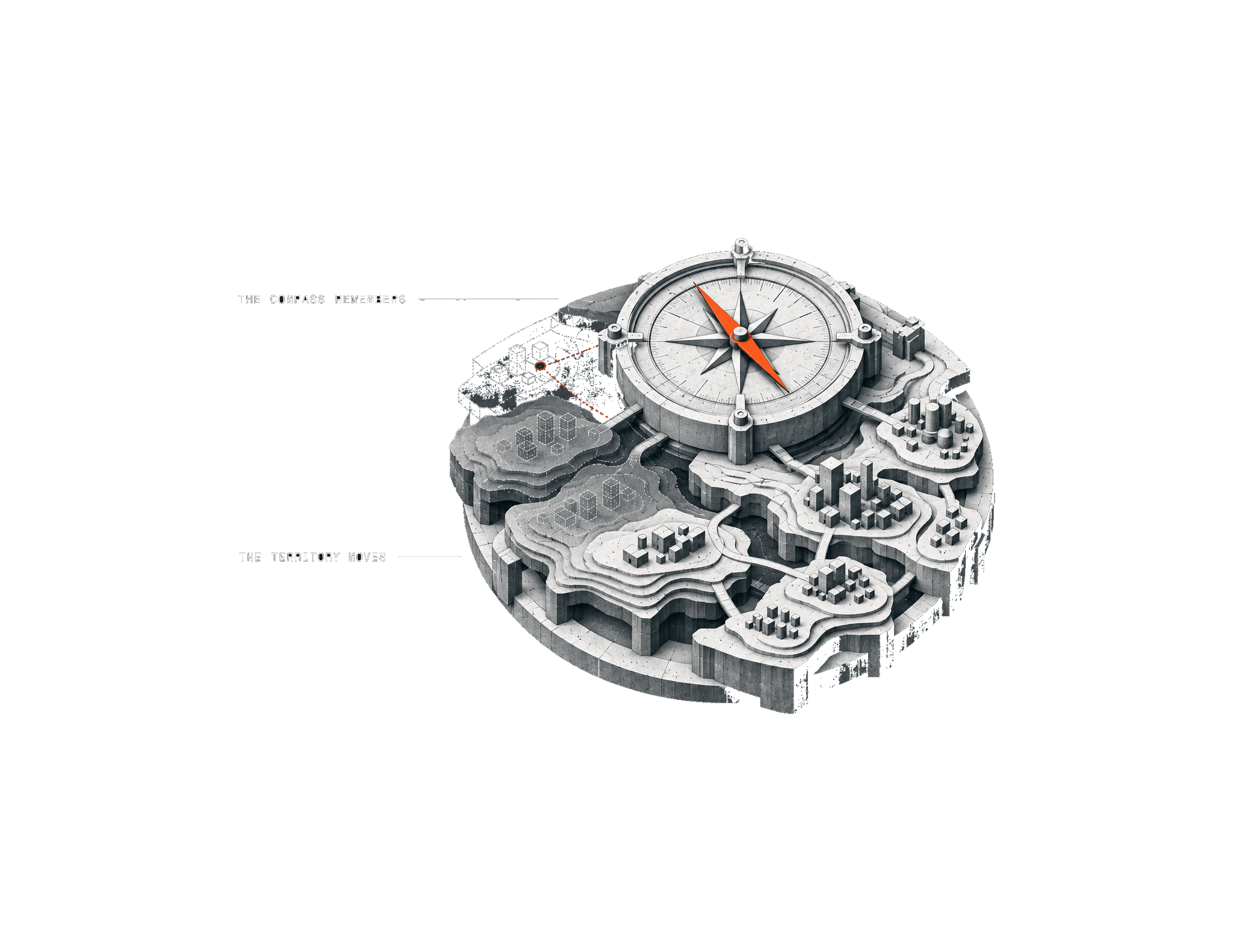
What you remember about your brand is a rumor
I asked an AI assistant to draft this article.

Memory is a lossy copy of your brand
After twenty years of brand and design strategy I still do this, and so does every team I have worked with. We decide from what we remember. What we remember is the last workshop, the loudest stakeholder and the tagline that survived. The real material, the interviews, the adjectives people voted for, the things we said no to and why, sits in a PDF nobody opens after the handover.
Every decision taken from memory drifts a little. A post slightly off voice. A landing page promising something the brand never promised. None of them is a problem alone. Twelve months of them, and the brand you run is a rumor about the brand you defined.
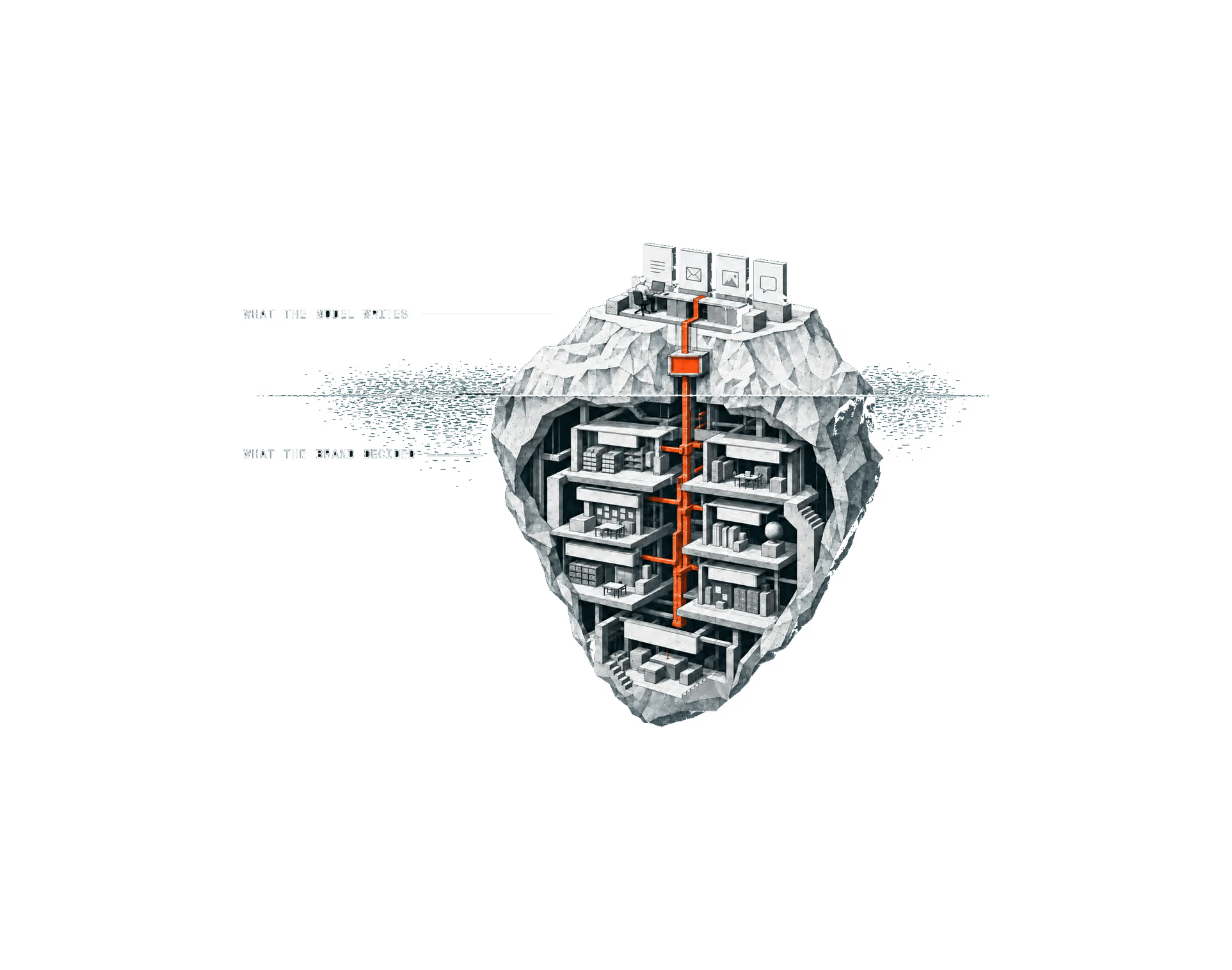
AI makes the drift faster. A model with no access to what the brand decided will fill the gap with the average of the internet, fluently, in your name.
The second is a brand compass in Numena, the brand archetype engine I founded. Disclosure made, then. It holds positioning, values and tone of voice, derived from what people inside and outside answered about the brand. What I wished they had said has no vote.
Both are exposed through MCP, the protocol that lets a model read a source instead of guessing at it. When I ask for a draft or a reply to a lead, the model reads the compass and the relevant notes first. I can ask which note a claim came from. When the draft contradicts a note, I find out which of the two is wrong, and sometimes it is the note.
This article went through that loop. It was drafted against my compass and my tone rules, then pushed as a draft into Ekitai, the platform this site runs on, through the same protocol. I reviewed and edited it before it went live. The machine did the reading and the typing. The rules were mine, and they were written before the machine ran.
Where it breaks
A connected second brain only knows what you wrote down. If your notes flatter you, the system will flatter you with citations, which is worse than flattery without them.
The compass ages. People change their mind about a brand faster than founders do. A compass nobody surveys again becomes the PDF in the drawer, this time with an API.
And the model still wants to agree with you. Grounding narrows what it can invent, but the deciding stays with you. I keep a rule in the vault that tells the assistant to argue with me. It helps. It does not replace noticing the moment I stop reviewing and start approving.
Start with one rule
You do not need my stack. Write down one decision your brand has already taken, with the reason, in a file a model can read. A word you do not use and why. A promise you refuse to make. Then make every draft pass through it.
The first time the system stops you from saying something you wrote a rule against, you will see how much you were deciding from memory.
What did your brand decide last year that you have already forgotten?