// CASE 03 · ACCREDIA · DIGITAL TRANSFORMATION
Don't speed up the loop. Delete it.
Accredia certifies the people who certify everyone else in Italy. In 2016 one person spent 9,600 minutes a month, a full working month, uploading documents by hand into a reserved area for the board. The brief was a new website. The job was to make that month disappear.
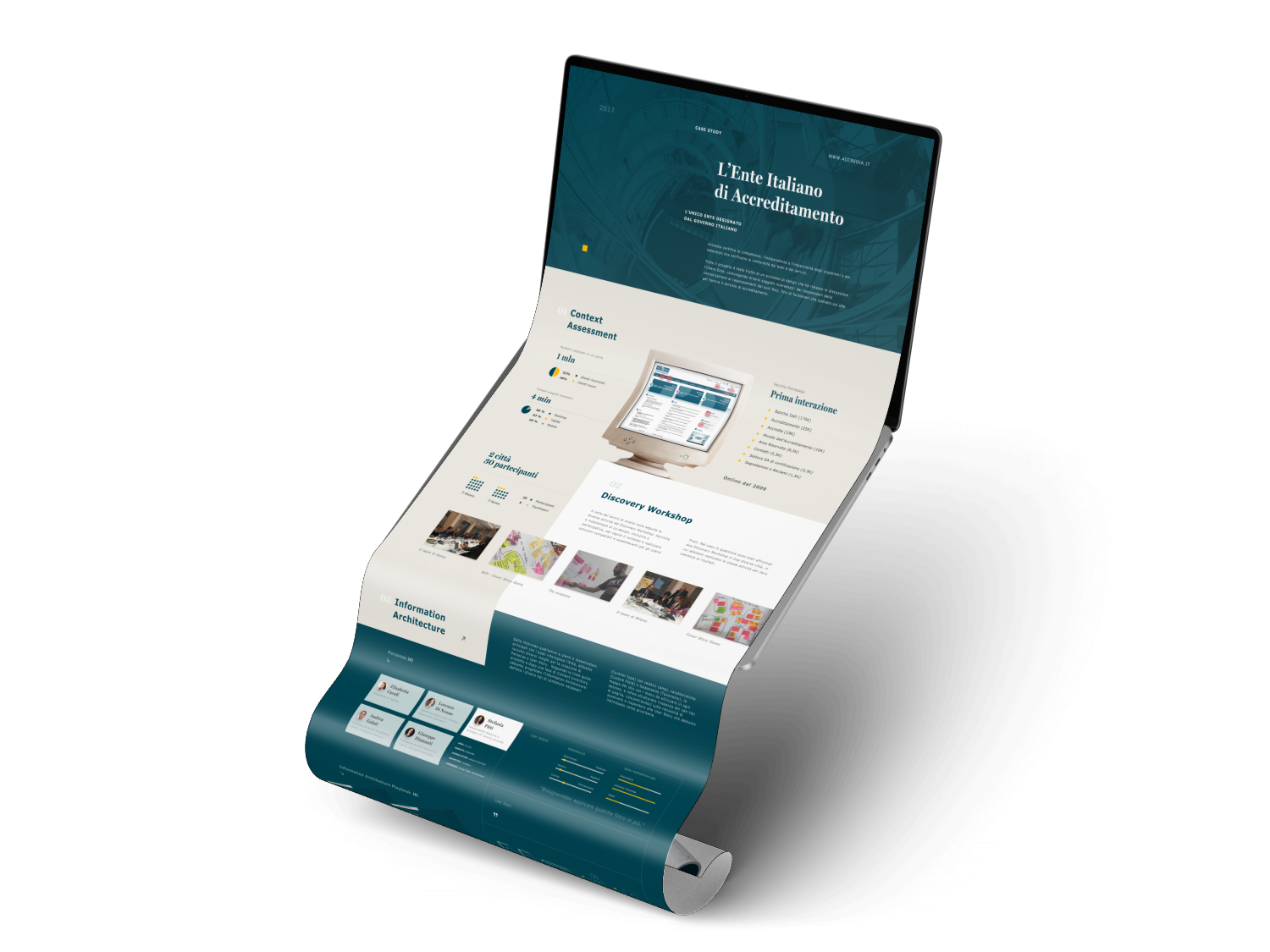
fig 01 · The new accredia.it, modular and run by the editorial team.
fig 01 · The new accredia.it, modular and run by the editorial team.
9,600
minutes a month spent uploading documents, before
1
person freed for work an algorithm cannot do
11
months of continuous co-design with the internal team
2009
the year of the website we replaced

fig 02 · Context assessment: analytics, search intent, peer bodies abroad.
01
Executive summary
Accredia is the only body appointed by the Italian state to accredit certifiers and laboratories. Its website dated from 2009 and its reserved area asked one operator to open a form, pick a file, upload it, describe it, and repeat, for a month, every month. We rebuilt the public site as a modular, editorially autonomous system and, more importantly, we wrote down the algorithm that person was running by hand and replaced it with an automatic document flow between the operator and the board.
02
Four phases, eleven months
➔ Context assessment: analytics on the old site, search intent, comparison with peer bodies abroad
➔ Two discovery workshops in two cities, same activities, to make results comparable
➔ Interviews with users and stakeholders, personas, user stories, content inventory, information architecture
➔ Wireframes, atomic design system, two rounds of usability testing, WordPress theme built on our Glitch base
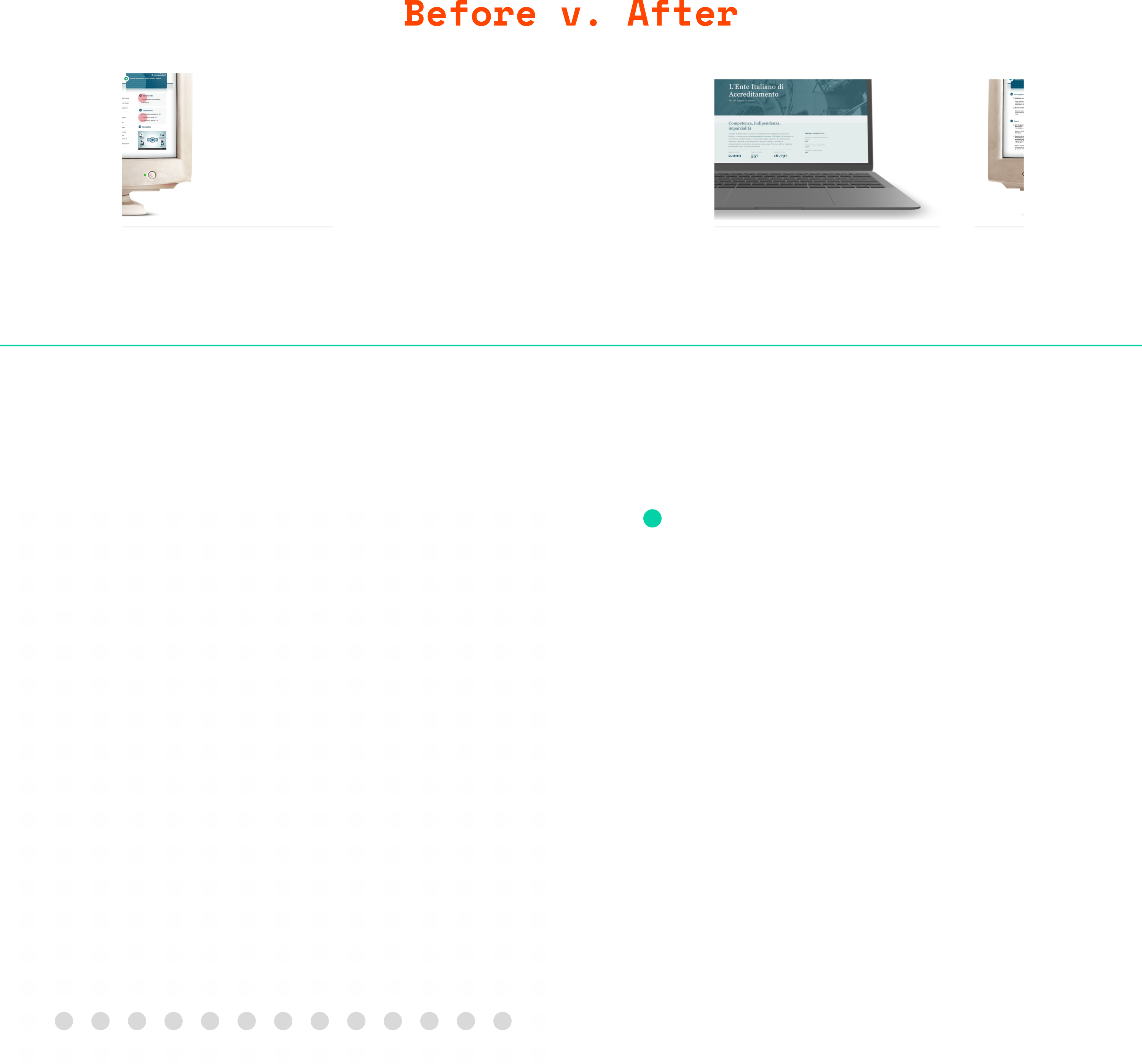
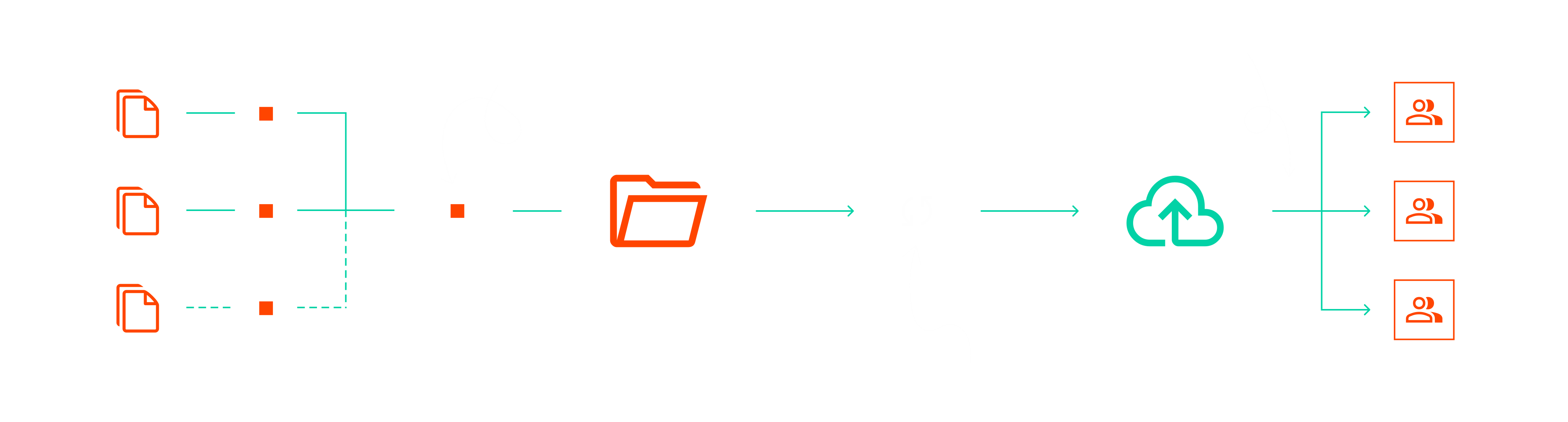
fig 03 · The document flow, before and after: the manual loop is gone.
Tools & tactics
Co-design facilitation
Analytics and search-intent triangulation
Atomic design system
Usability testing, internal and external
03
Issues discovered
➔ The two most used calls to action, Documents and Databases, were buried where analytics said nobody looked.
➔ Content was organised by the body's internal structure, not by what certifiers and companies came for.
➔ The reserved area had no concept of a workflow: every document was a manual upload plus an email thread with the board.
➔ The 2009 site could not be updated without a developer, so it was not updated.
➔ Internal habits were strong, and a redesign that ignored them would have been rejected.

Five principles, one process
Respect the existing flow, then automate it
Build the design system from real content, not a kit
Editorial autonomy is a feature
Open source as a tool for independence
Prove it with data and with people
04
Results
A new modular site the editorial team runs on its own, and a document flow that dropped from 9,600 minutes a month to a few: the person who ran it by hand moved to accreditation work that cannot be written as an algorithm. Accredia never published a figure in euros, and neither will I: earlier versions of this page carried a projection that was ours, not the client's. What did not happen: the API layer we had sketched to make upload a drag-and-drop gesture was never built. What I keep: in 2016 we called this process redesign, in 2026 it is called AI transformation. It is the same move, first write down the algorithm a person is executing, then take the person out of it. It is also the first site I designed to be managed without us, the idea that became Ekitai.
05
Lessons learned
➔ You do not always need to innovate. Sometimes you need to respect what exists and free it
➔ A real design system is built from real content, not from a UI kit in Figma
➔ Open source becomes an emancipation tool when you listen to people first