// CASE 01 · AIRBNB × TRANSLATED
Redesigning translation trust, one listing at a time.
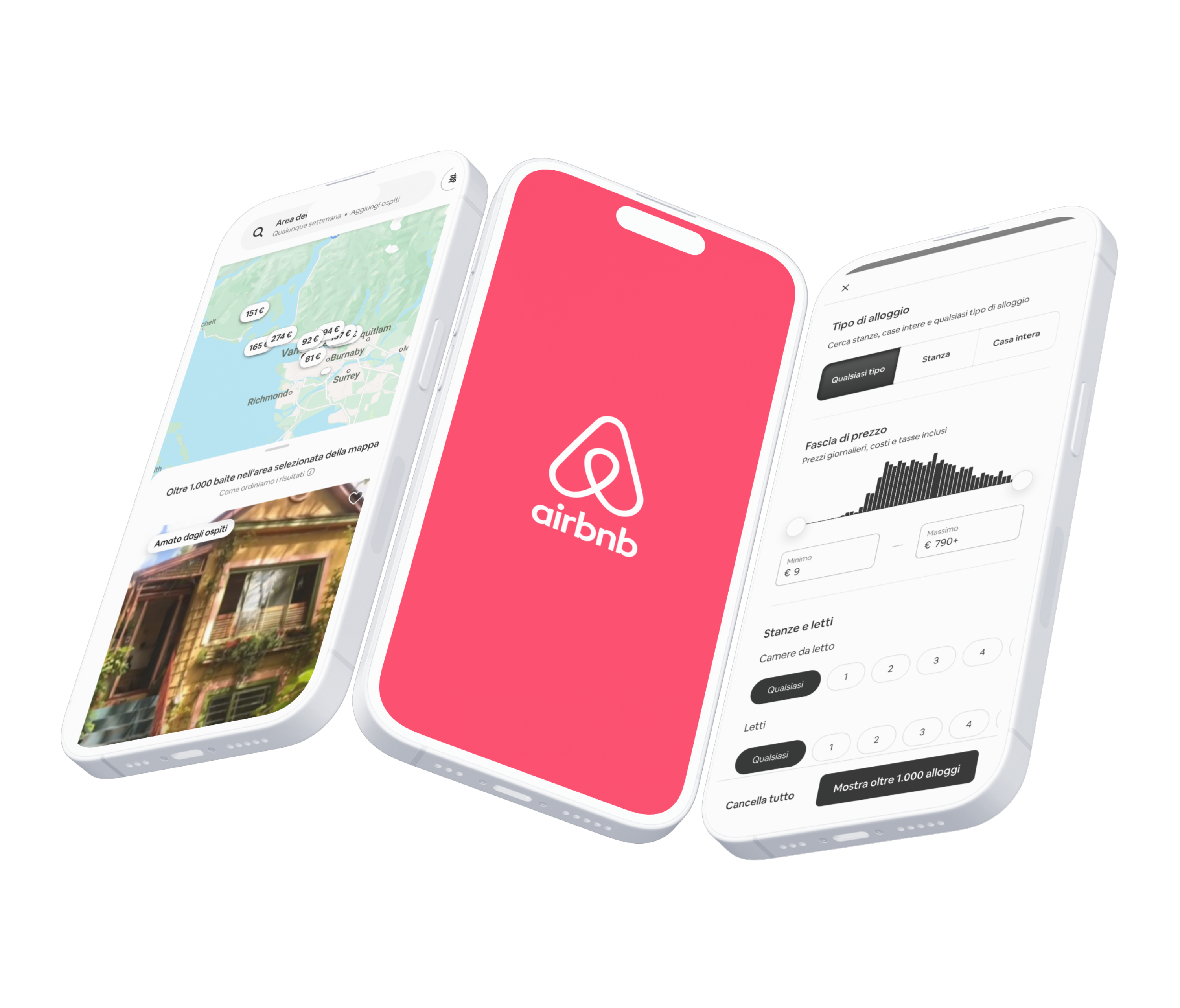
About one host in five wrote their listing mixing two languages. Guests got confused, and the new machine-translation pipeline built with Translated had nothing clean to work on.
We redesigned the listing flow so hosts would write in one language, and trust what the machine did with it.
01
Executive summary
Airbnb had just signed with Translated to localize the whole marketplace through a mix of machine translation and professional translators.
One thing broke the pipeline before it started: hosts writing the same description in Italian and English, or in a language different from their account.
The machine could not tell which voice to keep.
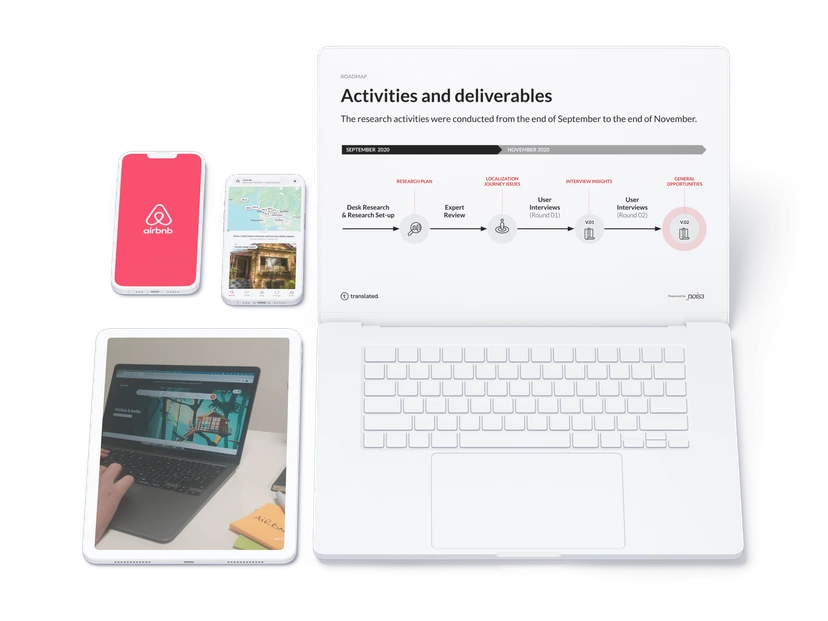
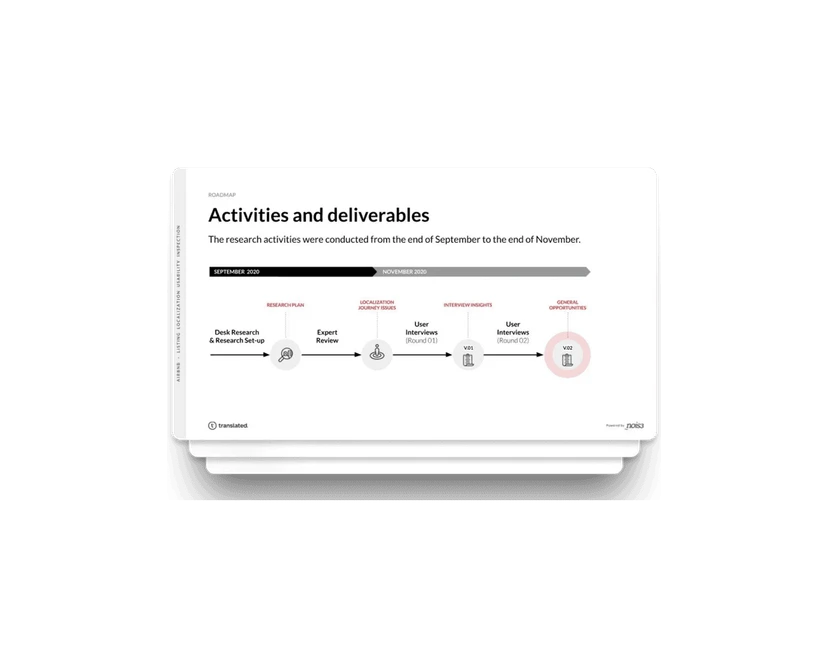
We ran an expert review and two rounds of usability testing with hosts, and gave the product team a redesigned listing flow plus a set of interface changes to stop the problem at the source.
02
Four phases, one question
Tools & tactics
03
Issues discovered
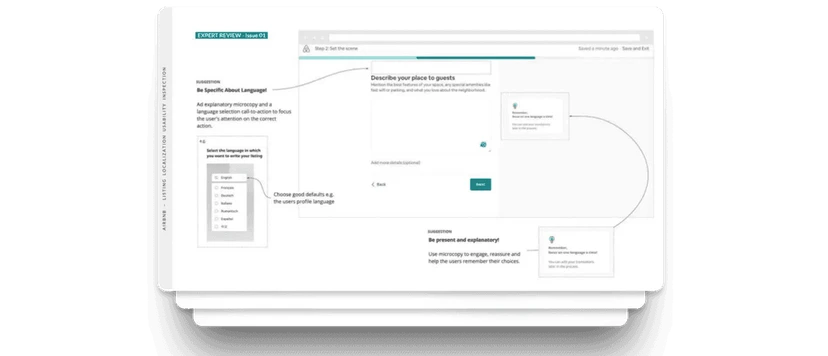
Five design principles, one per issue
04
Results
Shipped in the Winter Release 2021, across the whole marketplace.
Mixed-language listings dropped, machine translation became the default hosts accepted, and the localization team had evidence instead of assumptions to prioritise the backlog.
The lift in UX and revenue is an internal Airbnb figure I cannot publish, so it stays qualitative here.
What I would do differently: measure post-booking signals (complaints, no-shows, reviews) from day one, not only listing conversion.
Today, guest-host chat on Airbnb is translated in real time on the same foundations, and the same question, "does the machine keep the human voice?", is the one I ask of every AI feature I ship.
05
Lessons learned